In France, nearly one in five students uses individual educational support at least once during their schooling. Despite the democratization of these systems, significant disparities persist regarding access to and effectiveness of home support depending on regions and social backgrounds. The results are directly reflected in the students’ progress.
Behind these figures lies a reality: personalized home tutoring is a measurable lever to enhance confidence and sustainably improve academic skills. Several recent studies confirm the positive impact of this type of support, provided that certain proven practices are followed.
Why home tutoring makes a difference in children’s success
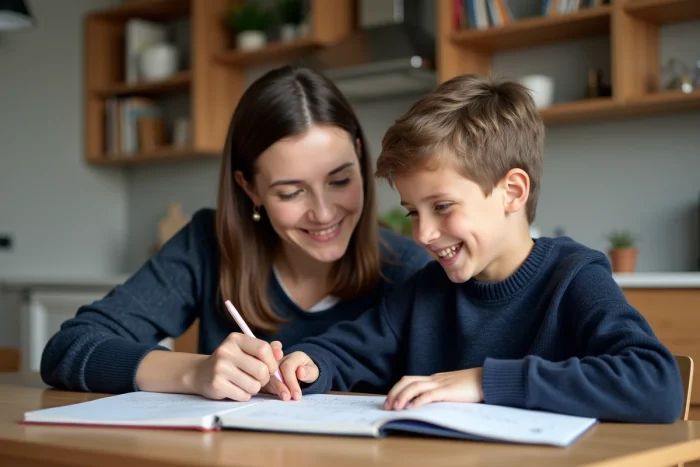
Relying on home tutoring is betting on a solid tool against the educational injustice that quietly sets in. A home tutor adapts to the reality of each child, tailors their approach according to the academic level, and targets their efforts where it matters. Far from the noise of the classroom, private lessons offer the space to question, experiment, and take ownership of knowledge at one’s own pace, without fearing the gaze of peers.
Tutoring acts profoundly. It restores confidence, guides towards better stress management, and provides organizational tools for schoolwork. With personalized support at home, obstacles are identified, and knowledge is reinforced over the sessions. Families often mention a new dynamic, motivation returns, progress is clearly felt, and the child rediscovers the joy of learning.
Here’s what an adapted support approach concretely brings:
- The child progresses at their own pace, without external pressure
- Difficult subjects benefit from targeted reinforcement
- Independence becomes a real skill rather than a wishful thinking
The availability of a trained adult makes all the difference. For those who want to learn more or consider professional support, just discover the Soutien Adom website.
What are the signs that your child could benefit from private lessons
Some signals should catch your attention, provided you don’t dismiss them too quickly. A child who is silent in front of their homework, constantly postpones schoolwork, or multiplies escape strategies often expresses a real difficulty. When grades slip, whether it’s a temporary slump or a persistent trend, it reflects discomfort with the demands of the academic level.
On their part, parents sometimes notice unexpected changes: sudden nervousness at homework time, discouragement, a feeling of blockage. A young person capable of working alone who suddenly demands constant support, or who struggles to keep up with the pace of the class, requires structured help. Many feel lost despite repeated explanations, indicating that an external reference becomes necessary.
It is also not uncommon to observe certain learning difficulties: difficulty memorizing, abnormal fatigue while reading, scattered concentration. The family atmosphere becomes tense, discussions about school are charged with tension. As soon as this kind of climate settles in, there is no time to wait.
Here are the warning signs to watch for:
- Recurring rejection of homework or difficulties in getting started
- Consistently lagging results in several subjects
- Doubts that weigh down every test or quiz
- Signs of fatigue or unusual agitation as classes approach
Detecting these signs allows for early intervention. A private lesson at home then offers a tailored alternative, stepping in when the collective method shows its limits.

Concrete advice to support your child and choose the right home tutoring
Helping a child progress is never about magic, but about a daily prepared ground. The first reflex to adopt: have an honest discussion with them. Allowing their own words to emerge about their desires, doubts, and sticking points is already diagnosing and identifying where home tutoring makes sense.
Every student needs personalized support. The private tutor adjusts their method, takes into account the current concentration, detects sensitive points, and adapts their strategies. The attitude of the home tutor is equally important: listening, patience, and the quality of the bond formed with the child are drivers to rekindle the desire to learn and sustain progress.
Also consider organizing time. Distributing the week between sessions dedicated to schoolwork and moments of relaxation prevents the suffocating phenomenon that threatens long-term motivation. This balance promotes progress at a pace suited to the child.
Another lever to explore: the tax credit for personal services. It allows you to lighten the expenses related to home tutoring. Be sure to gather the necessary supporting documents and inquire to meet the required conditions.
To approach your child’s support with peace of mind, keep these milestones in mind:
- Initiate regular dialogue to best understand their needs
- Choose a qualified, attentive, and genuinely involved teacher
- Structure the week in a flexible yet coherent manner
- Value every progress, even modest, without excessive pressure
The caring and attentive presence of parents often remains the common thread. By establishing a climate of trust and keeping a discreet but constant eye, you help your child unleash their full potential. The path of learning is not linear: it goes through hesitations, leaps forward, and sometimes setbacks. But with thoughtful support at home, success becomes a unique, lasting, and vibrant trajectory.