The coefficient of a surveyor, inherited from the national collective agreement, immediately sets the pace for the first pay slip. However, this benchmark, far from being universal, is not really stable: it fluctuates between the private and public sectors, sometimes causing striking disparities. Revaluations progress at a measured pace, but gaps remain. Meanwhile, the hunt for rare profiles is in full swing: technical skills, digital expertise, each competency raises the stakes. By 2026, the profession will paint a completely different picture. Collective negotiations are multiplying pathways and advocating for remuneration tailored to each career path, at the crossroads of experience and boldness.
Overview of the professions of surveyor and topographic engineer in 2026
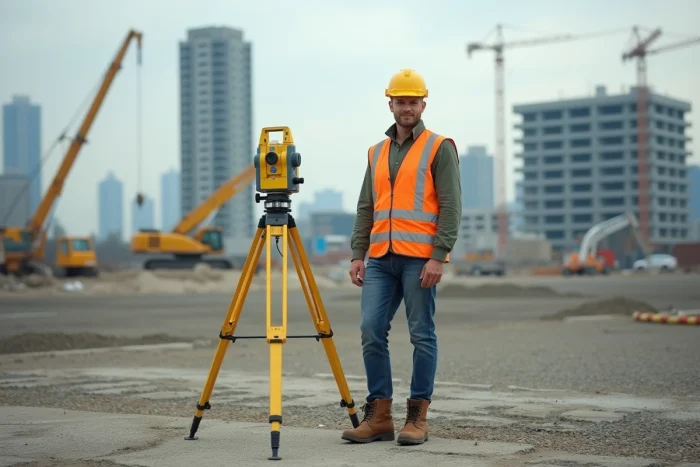
It is impossible to recognize yesterday’s surveyor in today’s, as their missions have expanded significantly. Boundary marking, cadastre, and measurements are no longer enough: now, these professionals participate in large-scale projects, orchestrate the safety of urban sites, and intervene in strategic industrial projects. Their skills are called upon in various fields, from the field to the design office, with a broader range of tasks. Precision, responsiveness, and digital technologies now define their daily work.
Access to the profession comes through several pathways: BTS, engineering schools, career changes, and apprenticeships. Those most comfortable with innovation, those learning to handle data or embarking on managing complex projects, clearly have the advantage. What makes the difference in 2026? The ability to merge technical mastery and agility. At each new stage, the question arises: the salary of a surveyor in 2026 remains a reference point for positioning oneself, negotiating, but also considering the future.
How much do we really earn? Salary grids, collective agreements, and changes based on experience
In the construction industry, the collective agreement continues to set the framework. A junior surveyor technician usually earns between €1,850 and €2,100 gross per month (ETAM status). Young engineering graduates start around €2,800 gross. Very quickly, various bonuses and travel allowances come to supplement this base, especially for those who frequently work on-site.
Experience shifts the lines: after five to ten years in the field, most earn between €35,000 and €45,000 gross annually, a figure that rises further when taking on broader roles or specializing in BIM, advanced modeling, or working in Île-de-France.
Here are, concretely, the factors that can increase remuneration with private employers:
- Increased pay for work during atypical hours or for specialized technical missions
- Opportunities for project management roles, with expanded supervision
- Allocation of bonuses tied to results and individual commitment within the organization
Another striking observation: profiles with expertise in CAD, BIM, or 3D surveying are in high demand, with salaries rising sharply. Faced with the shortage of these skills, companies no longer hesitate to break their pay scales to attract or retain these candidates. This trend is expected to strengthen in the coming years.

Training, career paths, and prospects for salary increases in the coming years
Access to the profession now comes through various routes: BTS in surveying, recognized schools such as ESGT, INSA, or ESTP. Apprenticeships, which are well-developed, provide quick access to the field and accelerate the acquisition of autonomy. Each path presents its own prospects: the possibility of climbing the ranks through professional routes or orienting oneself towards technical or managerial specializations from the outset.
Now, nothing is set in stone: recognition of prior learning (VAE), specialization in land management, mastery of digital tools, or project management, these choices open up real opportunities for financial advancement while maintaining control over one’s career progression. Continuing education and internal mobility become true accelerators of career paths.
The demand for specialists is rising: digital, project management, BIM expertise, each skill sharpens the interest of recruiters in a market where retaining talent becomes a priority. Those who stray from the beaten path, embrace the new, or dare to innovate, see their trajectory accelerate and their remuneration soar.
On the eve of 2026, being a surveyor is no longer limited to a single model: everything remains to be created, chosen, and invented. The real question: who will dare to push the next frontier?