A building permit dating back more than thirty years is not a given in the drawers of administrations. Some town halls meticulously keep their files, while others let archives slip past a certain threshold, depending on the size of the municipality or the nature of the construction. Between local variations and often opaque archiving practices, each case is a gamble.
Access to these old documents also depends on regulatory developments, and digitization does not solve everything: archives are far from being just a click away. To track down a permit or plans that have been missing for decades, one must know the right contacts, understand the procedures, and know where to look, whether on paper or behind a screen.
Finding an old building permit: why is it sometimes a real challenge?
Anyone who has tried to find an old building permit knows how quickly the process can turn into a test of patience. Each town hall, responsible for its own archives, applies its methods: from one municipality to another, preservation varies, depending on organization, events, or the rigor of services. It only takes a move, a merger of local authorities, or a clumsy sorting wave for certain files to disappear forever. A permit can thus fade into the dust of years, taking with it plans, decrees, notices, and technical opinions.
Obtaining a file that is several decades old involves knocking on the right door, sometimes multiplying requests, and above all, being patient. Gathering a period form, a lost plan, or the original signature of the mayor then resembles a race against the archives, where time rarely plays in your favor. The agents, for their part, must deal with the reality of available resources: among piles of boxes, worn microfilms, or scattered records, their task is far from a walk in the park.
The centralized computer system only concerns recent files or those deliberately transmitted by certain local authorities. Permits issued before the widespread use of computers rarely reside in a digital database. To trace their path, one sometimes has to reconstruct the chronology: guess the construction date, contact the original instructing service, explore departmental archives if the town hall on-site is unhelpful.
Behind this search, the goal remains the same: to prove that a building complies with regulations, dispel any suspicion of violation, or prepare for the sale of a property. The steps to follow vary depending on each case; there is no universal method, only approaches tailored to the date of the permit and its administrative journey.
What steps to obtain the plans or urban planning authorization for a house built more than 30 years ago?
Starting with the urban planning department of the town hall remains the quickest route. It is advisable to make a clear request, ideally in writing, mentioning the property’s address, the estimated period of construction, and, if possible, the name of the original owner. The building permit file contains all the documents: plans, decrees, notices, as well as the technical opinion of the time. According to the Code of Relations between the Public and the Administration, everyone can consult them. On-site consultation is free; only copying or mailing fees may be charged.
Situations can sometimes be more complex: here are possible alternatives when the town hall no longer has a record of the permit.
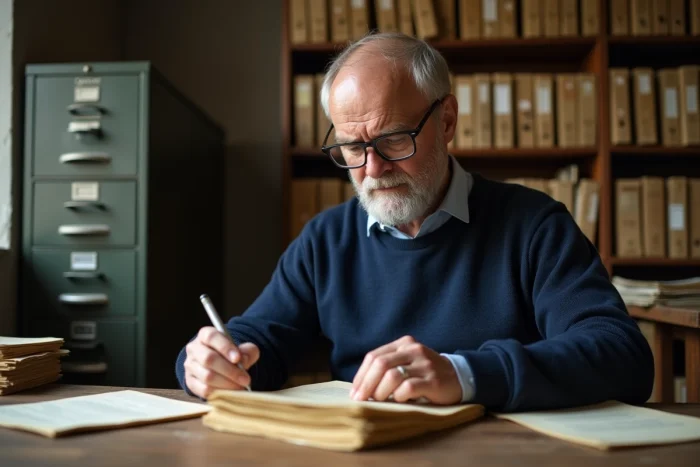
- The first option is to turn to the municipal or departmental archives. Old documents are generally preserved there after being transferred by the town hall, with the delay often ranging from 10 to 30 years.
- If faced with prolonged silence or a refusal, contacting the Commission for Access to Administrative Documents (CADA) can help unlock the situation, as this body intervenes in access to public documents.
- The property tax office sometimes keeps a copy of the building permit or at least the completion date, which can help support a search or strengthen a file.
The site cadastre.gouv.fr offers access to cadastral data, but not to architectural plans or the permits themselves. When it comes to securing a transaction or ensuring the condition of a property, consulting a professional (notary, real estate lawyer, real estate agent) can help move things along faster or lift persistent blockages.
Practical resources and tools to better understand the history and urban planning of your property
Behind every property lies decades of history, and often well-organized archives, sometimes dormant. The urban planning department of the town hall gathers, for each plot, the building permits, preliminary declarations, and chronological decrees. This administrative memory traces both major transformations and small invisible works.
To deepen the exploration, several resources prove valuable:
- The local urban planning plan (PLU) allows for identifying zoning changes, the presence of any easements, or constraints imposed over time.
- The departmental archives are full of paper or microfilmed documents to complete the puzzle of old files and understand the administrative context of the past.
- The national database SITADEL lists urban planning authorizations transmitted to the State by local authorities, and updated by the Data and Statistical Studies Service. Note: this record mainly concerns recent acts.
Scrutinizing the urban planning code helps understand the regulations applicable at the time of construction: deadlines, obligations, potential acquired rights. On plots close to a classified monument, the presence of an opinion from the architect of historic monuments in the file often sheds light on architectural requirements. Other services, such as the municipal road service, sometimes have plans related to access or traffic evolution. Through each piece of recovered archive, the red thread of a real estate story emerges, transforming a yellowed sheet into an irreplaceable witness to a house’s past.