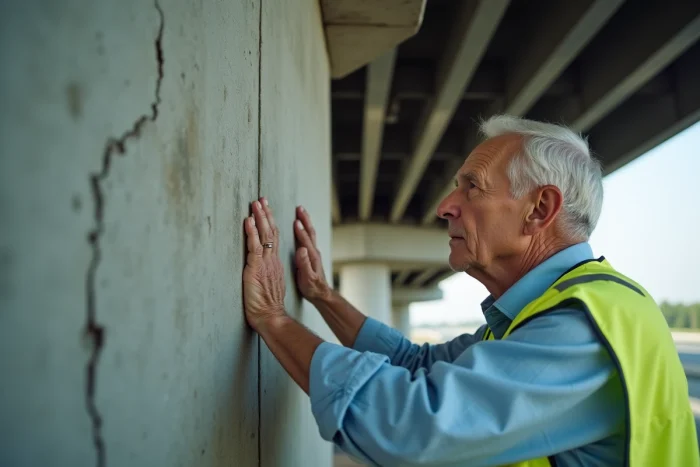
Some concrete bridges cast nearly a century ago remain in service, while more recent structures already require major repairs. Significant differences arise depending on climatic conditions, the quality of materials used, and the maintenance methods applied. Current regulations impose nominal lifespans, but the reality on the ground often deviates from these standards.
Alternatives like rammed earth, used in some regions for centuries, show varied performance depending on usage and exposure to the elements. Technical and environmental choices strongly influence the actual longevity of each material.
Understanding the durability of concrete and rammed earth in modern construction
Talking about the longevity of concrete touches on the heart of contemporary architecture. This material, available in a thousand variations, reinforced, pre-stressed, ready-mixed, structures our roads, bridges, and buildings. Its success is explained by its robustness and incredible adaptability. However, its actual lifespan depends on a tangle of factors: the quality of aggregates, the choice of cement, precise water dosage, as well as care taken at every stage of the construction site. Protecting steel reinforcements from corrosion, often neglected, is equally crucial for long-term resistance.
On paper, reinforced concrete structures hold up over time. But practice reveals weaknesses. Air, water, and freeze-thaw cycles eventually infiltrate, attacking the metal inside and causing cracks, spalling, and weakening. High-performance concrete formulations, fiber-reinforced variants, or those with very low permeability extend lifespan, but these technical choices remain primarily reserved for large-scale projects, where even the slightest defect comes at a high cost.
In contrast to this industrial logic, rammed earth, this compacted raw earth of which many ancient buildings still testify, claims another path. Less energy-intensive, it appeals due to its ability to naturally regulate humidity and its simplicity of execution. However, its resistance is closely tied to the environment: in dry and sheltered conditions, it can last for decades, but when exposed to rain or frost, it quickly loses its charm.
For those wishing to explore these questions in depth, Quartier Immo articles detail the subtleties of concrete resistance and question its limits. Understanding pathologies, the evolution of materials, and the impact of innovations enlightens the choices of professionals and individuals alike, and requires a rethinking of the very notion of durability.
What factors truly influence the longevity of these materials?
It is never a single detail that determines the lifespan of a concrete structure. It all starts with the composition: the purity of materials, the right balance between cement, sand, gravel, and water, and the addition of suitable additives. The slightest error during mixing or placement, insufficient drying, careless vibrations, or neglected curing can generate invisible weaknesses at delivery, but fatal in the long term.
To this equation are added the attacks of the climate. Freeze-thaw cycles, constant humidity, and salt from coastal areas accelerate the degradation of concrete and the corrosion of steel. In cities near the sea, structures suffer chemical aggressions that open the door to cracks, and then to the loss of overall cohesion.
In the face of these threats, maintenance becomes a decisive weapon. Here are some actions that make a difference:
- Regularly monitor the condition of exposed surfaces to detect any anomalies early.
- Repair cracks as soon as they appear to prevent moisture infiltration.
- Apply water-repellent protections when porosity increases.
- Have a structural diagnosis performed to target interventions before damage worsens.
Every step, from the choice of aggregates to regular maintenance, counts. Durable structures are those where nothing has been left to chance, neither during construction nor throughout their existence.
What choices should be prioritized for sustainable and responsible constructions?
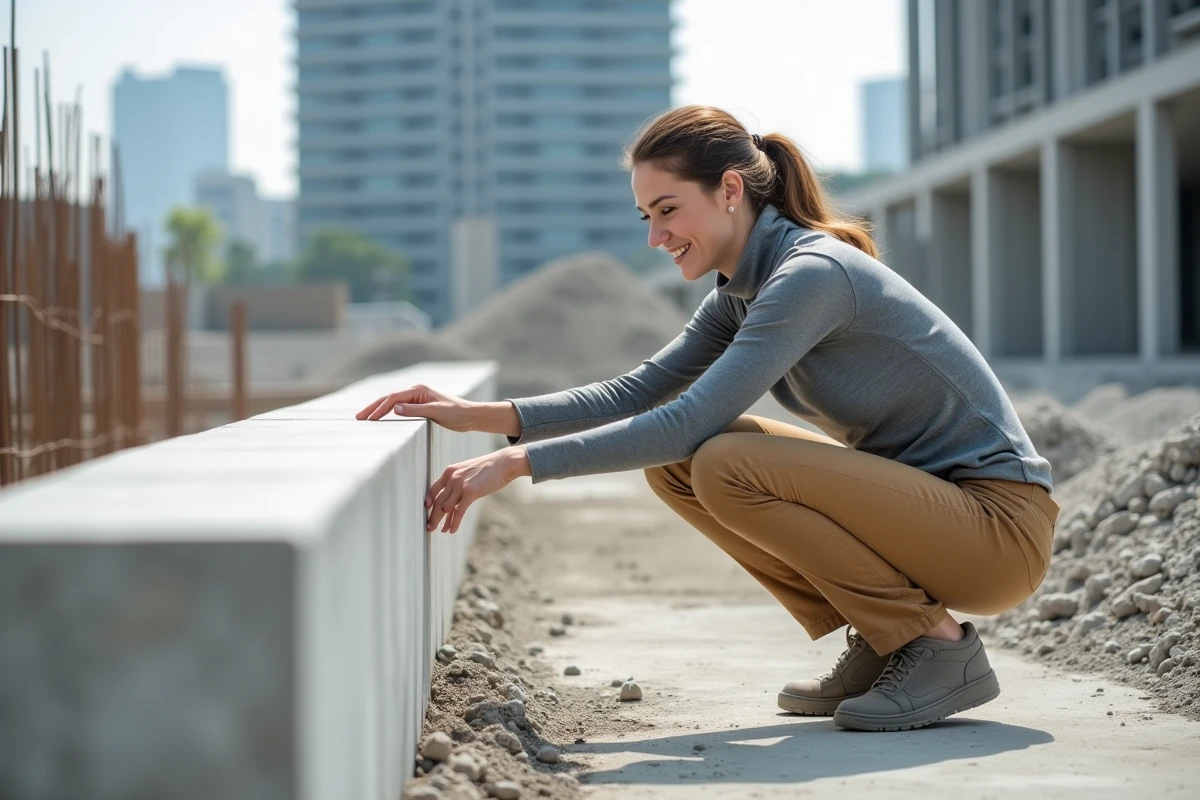
Building to last is not just about aiming for maximum strength. Between concrete, with its many technical variations, and rammed earth, the question also engages collective responsibility towards the environment and coherence with the territory. It is known that cement production, a pillar of concrete, has a heavy impact on the global carbon footprint. In contrast, rammed earth, made from local soil, drastically limits gray energy and promotes short supply chains.
| Material | Estimated lifespan | Environmental impact |
|---|---|---|
| Reinforced concrete | 50 to 100 years, or more with regular maintenance | High (cement, transport, additives) |
| Rammed earth | Over 100 years, provided it is well protected from water | Low (local resource, low gray energy) |
While concrete, enhanced by additives and specific treatments, prevails in the most demanding environments, raw earth excels where simplicity, thermal inertia, and ecological sobriety take precedence.
Here are some guidelines to steer the choice:
- For structures subjected to high demands or exposed to the elements, opting for high-performance concrete, coupled with rigorous maintenance, offers a broad horizon of durability.
- For passive buildings in temperate climates aiming for low carbon impact, rammed earth provides a robust, suitable, and sustainable response.
The longevity of a building is not decreed by universal standards. It results from an alchemy between the nature of the material, the quality of implementation, and the suitability to the context. Rejecting the one-size-fits-all solution opens the way to constructions that will endure through time without ever betraying their era.