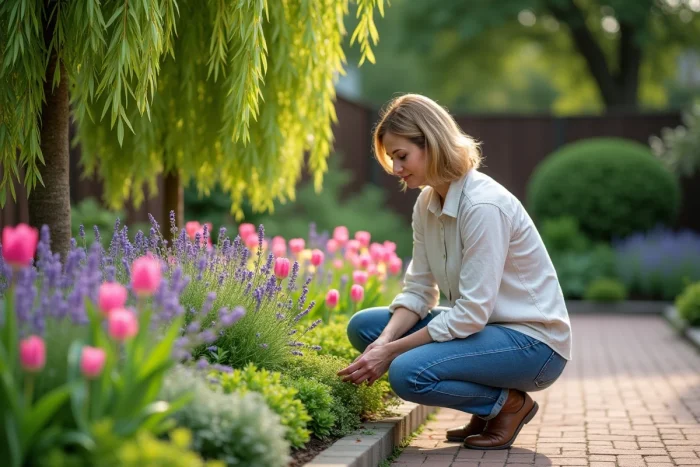
Some shrubs, despite their popularity, remain underutilized in structured floral compositions. The shrimp willow, known for its colorful young shoots, does not always integrate easily with other varieties without careful plant selection.
Criteria such as soil requirement compatibility or managing the rapid growth of the willow impose sometimes unexpected choices. However, several plant associations allow for a sustainable balance and enrich the diversity of the bed without multiplying interventions.
The shrimp willow: an original asset for structuring your flower beds
In French gardens, the shrimp willow, the famous Salix integra Hakuro Nishiki, catches the eye with its variegated foliage that combines cream white, soft green, and, in spring, that characteristic hint of pink. It is sometimes called harlequin willow: it captures light, imposes sharp contrasts in the beds, without ever falling into exuberance. Its compact silhouette, rapid growth, and reasonable size make this small tree welcome in both cramped gardens and large spaces, where it plays the role of both soloist and partner within a evergreen hedge. Installing a flower bed with shrimp willow offers a true framework for the entire garden. This small shrub loves well-drained soils, enjoys both sun and partial shade, and provides a solid graphic base around which everything revolves. Maintenance is not a chore: an annual pruning, outside of frost periods, is enough to maintain its vigor and the intensity of its variegated foliage. The shrimp willow readily pairs with shrubs of all shapes and colors, enhancing its decorative dimension. Next to small conifers in a hedge, it adds a quirky note. In front of a bed, it interacts with long-flowering perennials or airy grasses. The combinations are endless: with the flower bed with shrimp willow, every gardener can let their creativity shine, play with textures, and dare to add touches of color. This Salix never dominates the space; it animates it, gives it rhythm, and breathes life into it.
Which plants to pair to enhance its variegated foliage?
Creating a successful flower bed with shrimp willow involves choosing plants that harmonize with the vigor and freshness of this shrub. The variegated foliage of the Salix integra Hakuro Nishiki calls for companions capable of playing the contrast card or that of similar shades. Here are some concrete ideas to highlight its colors:
- Perennials with purple or silver foliage, such as heucheras, create light plays and emphasize the marbling of the shrimp willow. Red, brown, or acid green tones further enhance its graphic aspect.
- Light grasses, for example, Carex, bring movement to the bed without weighing it down, and align with the willow’s natural flexibility.
On the flowering side, it’s better to keep it understated. Near the shrimp willow, pink flowers, asters, or Japanese anemones integrate seamlessly. For a more pronounced effect, lilac can make an appearance. White-flowering perennials such as Gaura or Phlox paniculata echo the cream shade of the foliage, weaving a subtle link between the different planting layers. A shrub honeysuckle or an autumn camellia creates a romantic atmosphere, while the oleander evokes the South when winters are mild. Those who enjoy renewing their decor each season can opt for a bed in the style of an English garden by incorporating annuals with delicate blooms, to create a new graphic composition around the shrimp willow each year.
Successful arrangement ideas and maintenance tips for a harmonious flower bed all year round
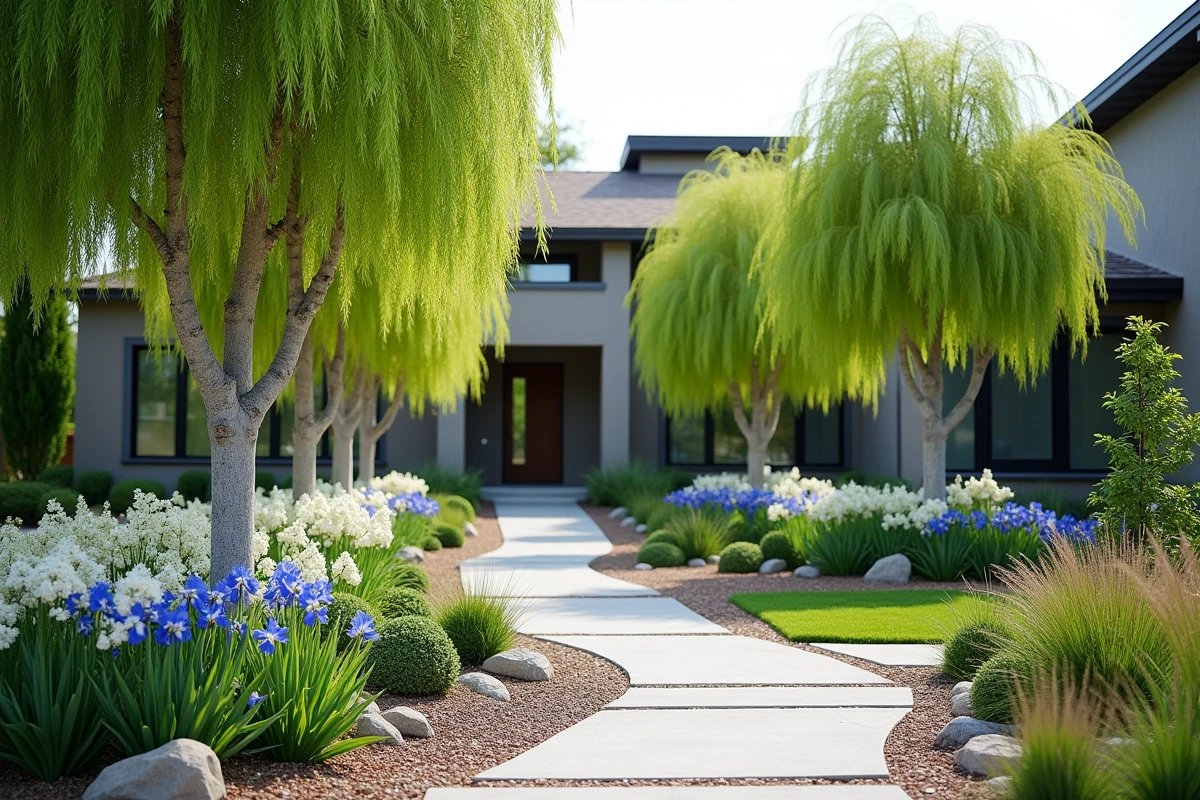
Arranging a bed around the shrimp willow is betting on a strong structure and visual breathing space. Place the Salix integra Hakuro Nishiki at the edge of the bed, along a path, or facing a terrace: where its variegated foliage will catch the light, it will fulfill its decorative promise. To keep a flower bed vibrant throughout the year, focus on volume effects: in the foreground, low spring-flowering perennials, then behind, grasses and summer flowers to create rhythm throughout the season. A few simple principles facilitate the success of the bed:
- Vary the heights: start with ground cover plants like perennial geraniums or alchemilla, then add low shrubs to structure the whole.
- Play with the alliance of foliage: combine evergreens and variegated foliage so that the bed maintains its presence even in winter.
- Plan staggered bloom times: this way, the bed evolves over the months without ever appearing bare.
Consider mulching to retain moisture and limit weeds. Watering should remain regular during hot weather, as the willow prefers a cool substrate. An application of organic fertilizer in spring boosts the vigor of the foliage. Prune at the end of winter: this stimulates the appearance of colorful young shoots. To propagate the willow, cuttings work wonderfully, a trick favored by seasoned gardeners. Finally, monitor drainage: the shrimp willow does not tolerate waterlogged soils. Creating a flower bed that lasts all year round is about orchestrating each planting, each maintenance gesture, to compose a living tableau that continually reinvents itself.